 By Diego Reyes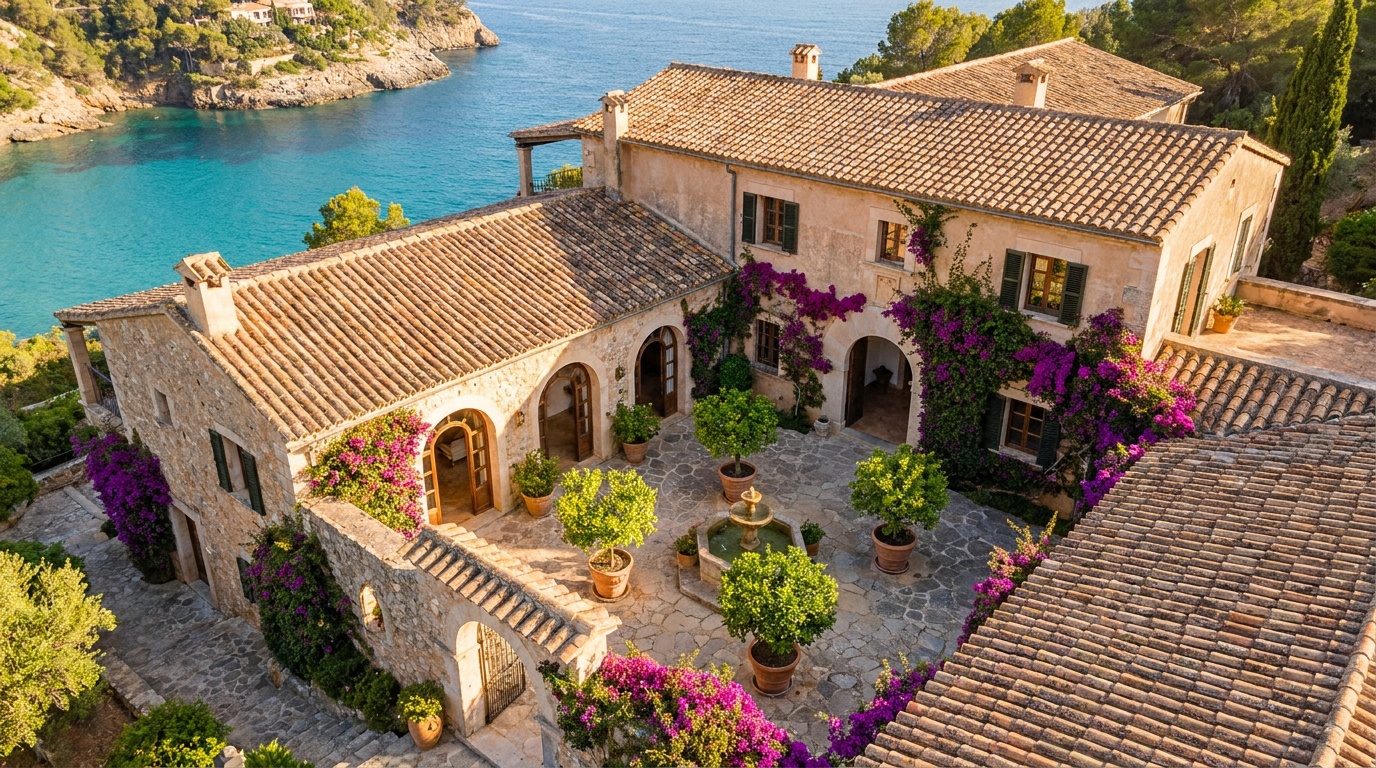
Mediterranean vs. Modern Villa Architecture: Key Differences Explained
Reading time: 14 minutes
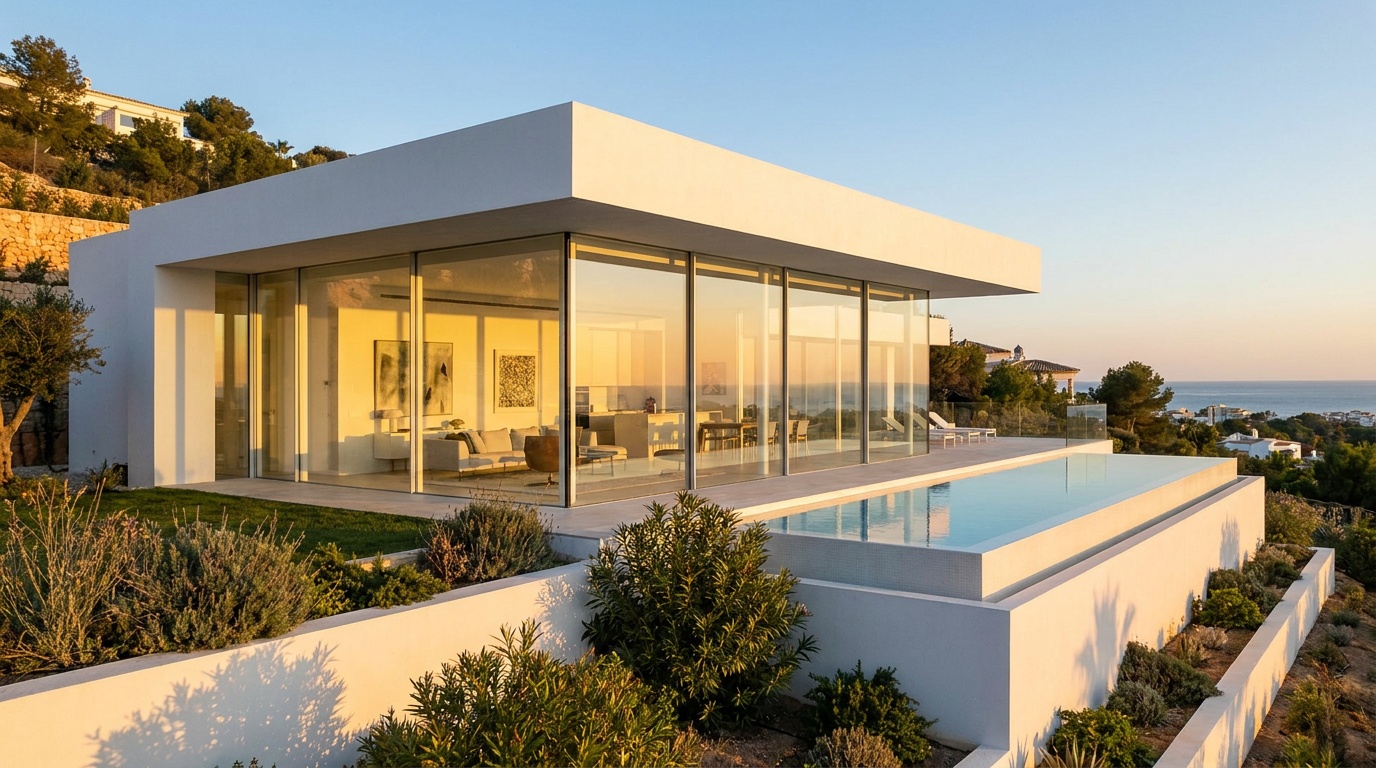
Picture this: You’re standing at a sun-drenched hilltop in Mallorca, comparing two neighboring villas. One is draped in warm terracotta, wrapped in climbing bougainvillea, with arched doorways and a courtyard that feels like it was born from the earth itself. The other is a crisp, geometric masterpiece — floor-to-ceiling glass, angular roof lines, and a minimalist palette that practically whispers “restraint.” Both are breathtaking. Both are wildly different. And if you’re about to build, buy, or renovate a luxury villa, understanding what separates these two architectural philosophies could be one of the most valuable decisions you make.
As of 2026, the global luxury villa market is experiencing a fascinating tension between these two dominant design languages. According to the Global Luxury Real Estate Report 2025, Mediterranean-style properties still command a premium in coastal European and Latin American markets, while Modern villa architecture has surged in popularity across Southeast Asia, the Middle East, and urban American markets — with a 34% increase in new Modern villa constructions recorded between 2023 and 2025 alone.
So which style is right for you? And what exactly makes them different beyond the obvious visual cues? Let’s break it all down with precision, clarity, and a few real-world examples that will make these architectural distinctions impossible to forget.
Table of Contents
- Origins and Philosophy: Where Each Style Comes From
- Key Architectural Features Compared
- Materials, Textures, and Finishes
- Interior Design Principles
- Climate Adaptation and Sustainability
- Cost, Construction, and Market Value
- Real-World Case Studies
- Head-to-Head Comparison Table
- Popularity by Region: Data Visualization
- Frequently Asked Questions
- Your Architectural Compass: Making the Right Choice
Origins and Philosophy: Where Each Style Comes From
Architecture is never just about aesthetics — it’s a conversation between culture, climate, and human need. Understanding the philosophical roots of each style helps you appreciate why they look and feel the way they do.
The Mediterranean Tradition: A Story of Sun, Sea, and Centuries
Mediterranean architecture didn’t emerge from a design studio. It evolved organically over thousands of years across regions bordering the Mediterranean Sea — Southern Europe, North Africa, and the Middle East. The Greeks, Romans, Moors, and Renaissance Italians all contributed chapters to this rich visual narrative. What binds this tradition together is an almost instinctive response to environment: thick walls to repel summer heat, shaded courtyards that channel cool breezes, and materials harvested directly from the local landscape.
The core philosophy is harmony with nature. A Mediterranean villa doesn’t conquer its landscape — it belongs to it. Colors echo the surrounding earth and sea. Textures celebrate imperfection and age. There is a warmth and a sense of accumulated history that is genuinely difficult to manufacture artificially.
In 2026, this style remains dominant in property markets across Tuscany, the Costa Brava, Santorini, Morocco’s Atlantic coast, and increasingly in coastal California and Florida, where Spanish Colonial Revival architecture has deep roots.
The Modern Villa Movement: Precision as Poetry
Modern villa architecture, as a distinct style, traces its intellectual lineage to the early 20th century Modernist movement — Bauhaus, the International Style, and later the works of architects like Ludwig Mies van der Rohe, Richard Neutra, and Le Corbusier. The guiding principle, famously articulated by Mies van der Rohe, was that “less is more.”
Modern villas are defined by an obsessive clarity of form. Every element must justify its existence. Ornamentation is rejected in favor of structural honesty. The relationship between interior and exterior space is dissolved through expansive glazing. The philosophy is about control, precision, and the celebration of contemporary materials — steel, reinforced concrete, engineered glass, and composite cladding.
By 2025, firms like Zaha Hadid Architects and Bjarke Ingels Group had normalized radical Modern villa concepts that would have seemed unbuildable a decade prior, and client demand for these forms grew substantially in Dubai, Singapore, and Los Angeles.
Key Architectural Features Compared
Let’s get practical. Here is where the two styles diverge most visibly — and most meaningfully for anyone planning a build or purchase.
Exterior Form and Rooflines
Mediterranean villas typically feature low-pitched or flat clay tile roofs — the iconic terracotta pantile is perhaps the style’s most recognizable signature. Rooflines are often layered and irregular, reflecting additions made over generations. Gabled sections, bell towers, and pergola-covered terraces add visual complexity. The exterior silhouette feels organic and asymmetrical.
Modern villas, by contrast, favor flat roofs, sharp horizontal lines, and bold cantilevers that project dramatically over outdoor living areas. The roofline is a design statement — clean, geometric, and often incorporating green roof systems or rooftop terraces. Asymmetry, when present, is carefully engineered rather than accumulated over time.
Windows, Doors, and Openings
In Mediterranean architecture, windows are typically smaller and deeply recessed within thick walls — a functional response to intense sunlight. Arched windows and doorways are a defining feature, often framed by decorative ironwork or carved stone surrounds. Wooden shutters, both decorative and functional, are a hallmark of the style.
Modern villas invert this logic almost entirely. Floor-to-ceiling glazing, sliding glass walls, and frameless glass corners are standard features. The goal is to eliminate the visual barrier between inside and outside. In 2026, smart glass technology — which can electronically tint on demand — has made this approach even more practical in hot climates, directly challenging one of Mediterranean architecture’s traditional functional advantages.
Outdoor and Transitional Spaces
Both styles celebrate outdoor living, but in profoundly different ways. Mediterranean architecture creates outdoor rooms through enclosed courtyards (the Andalusian patio), shaded loggias, and arcaded walkways. These spaces feel intimate, sheltered, and slightly mysterious — you discover them rather than see them from outside.
Modern villas prioritize visual continuity. Infinity pools that appear to merge with the horizon, seamless terrace transitions, and open-plan living areas that flow directly onto expansive decks define this approach. The drama is outward-facing and immediately visible.
Materials, Textures, and Finishes
Material choices are where the character of each style truly crystallizes — and where budget conversations often begin in earnest.
Mediterranean materials are fundamentally traditional and locally sourced wherever possible. Expect:
- Stucco and lime plaster exterior walls in warm whites, creams, and ochres
- Terracotta floor and roof tiles
- Natural stone — limestone, travertine, and local sandstone
- Wrought iron for railings, gates, and window grilles
- Reclaimed wood for beams, doors, and shutters
- Hand-painted ceramic tiles (particularly in Spanish and Portuguese variants)
These materials age beautifully and often improve in character over time. They also carry significant environmental credentials — low embodied carbon, biodegradable, and naturally thermally efficient.
Modern villa materials favor engineered precision over natural warmth:
- Board-formed or polished concrete for walls and floors
- Structural steel for frames, columns, and cantilevered elements
- Engineered timber cladding (often thermally modified for durability)
- Large-format porcelain tiles and quartz surfaces
- Frameless structural glass
- Aluminum and composite cladding panels
In 2026, the sustainability conversation around Modern villa materials has intensified. The construction industry’s growing carbon accountability means that architects are increasingly specifying recycled steel, low-carbon concrete alternatives, and responsibly sourced mass timber — a shift that is beginning to close the environmental gap between the two styles.
Interior Design Principles
Step inside each style and the philosophical differences become visceral rather than theoretical.
A Mediterranean villa interior communicates abundance through texture and accumulated detail. Exposed wooden ceiling beams, terracotta or hand-painted tile floors, arched interior doorways, and plastered walls in warm earth tones create an environment that feels simultaneously ancient and intimate. Furniture tends toward the substantial — carved wood, wrought iron, upholstered pieces in warm fabrics. Art and decorative objects are layered generously. The overall effect is one of curated richness.
Modern villa interiors operate on an entirely different emotional frequency. The palette is typically neutral — whites, grays, blacks, with occasional warm wood accents. Furniture is low-profile, geometric, and precisely placed. Storage is hidden behind flush panels. Lighting is architectural rather than decorative. The visual language is one of calm control, where every object is a deliberate choice rather than an accumulation.
Interestingly, a significant interior design trend in 2025 and 2026 has been the deliberate blending of these two languages — what designers are calling “Warm Modernism” or “Mediterranean Minimalism.” Think clean Modern architecture dressed with natural stone, terracotta accents, and organic textiles. This hybrid has been particularly popular in the luxury vacation villa market across Ibiza, Bali, and Tulum.
Climate Adaptation and Sustainability
Here’s where the comparison gets genuinely nuanced — and where architectural decisions have real environmental consequences.
Mediterranean architecture was, in essence, the world’s first passive cooling system. Those thick masonry walls — typically 400–600mm — provide substantial thermal mass, absorbing heat during the day and releasing it slowly at night. Small, shaded windows minimize solar gain. Courtyards create natural convection currents. A well-designed traditional Mediterranean villa can maintain interior temperatures 8–12°C cooler than ambient outside temperatures without any mechanical cooling — a remarkable feat that modern HVAC-dependent designs often struggle to replicate.
Modern villas, with their extensive glazing, face a genuine thermal challenge. The same floor-to-ceiling windows that create that breathtaking connection to the landscape can turn an interior into a greenhouse within hours of sunrise. The solution, historically, has been mechanical: sophisticated HVAC systems, motorized blinds, and solar control films. These work, but at significant energy cost.
However, the picture is changing rapidly. In 2025, triple-glazed electrochromic glass became cost-competitive for the first time in the luxury villa segment, dramatically improving the thermal performance of glass-heavy Modern designs. Combined with ground-source heat pumps, photovoltaic roof systems, and advanced building management software, Modern villas built in 2026 can achieve energy performance ratings that would have been impossible five years ago.
Pro Tip: If you’re building in a Mediterranean climate (hot, dry summers; mild winters), a well-designed traditional Mediterranean villa can outperform a poorly specified Modern villa on energy efficiency by a factor of three. But a thoughtfully engineered Modern villa with current technology can match or exceed it. The key word in both cases is thoughtfully.
Cost, Construction, and Market Value
Let’s talk numbers — because architectural preference and financial reality must coexist.
In general terms, both styles occupy the luxury construction bracket, but their cost profiles differ in important ways. Mediterranean villas tend to have higher material costs upfront when executed authentically — reclaimed stone, hand-crafted tiles, and skilled artisan labor for plasterwork are not cheap. However, maintenance costs over time can be lower for structural elements, as traditional materials are proven over centuries.
Modern villas often have lower initial material costs for the structural envelope but can carry significant premiums for high-specification glazing, engineered steel connections, and smart home integration. A 2025 industry survey by Knight Frank Luxury Construction Index found that high-specification Modern villas in prime European markets averaged construction costs of €4,200–€6,800 per square meter, compared to €3,600–€5,400 for comparable Mediterranean-style builds.
From a resale value perspective, the data in 2026 shows interesting regional patterns. In established Mediterranean markets (Tuscany, Algarve, Côte d’Azur), authentic Mediterranean-style villas retain value exceptionally well — buyers in these markets often pay a premium specifically for the style’s authenticity and regional resonance. In emerging luxury markets (Dubai, Bali, Miami), Modern villas command stronger premiums and appreciate faster, driven by younger, internationally mobile buyers.
Real-World Case Studies
Case Study 1: Villa Tramuntana, Mallorca (Mediterranean)
Completed in 2024, Villa Tramuntana near Deià represents a masterclass in contemporary Mediterranean architecture. The 650-square-meter property was designed by Palma-based studio OHLAB, integrating traditional Mallorcan construction techniques — dry-stone walls, lime mortar, locally quarried sandstone — with contemporary spatial planning. The interior courtyard captures the prevailing tramuntana breeze to naturally ventilate the living spaces. Despite no active air conditioning in the principal living areas, indoor temperatures remained below 26°C throughout the 2025 summer — one of the hottest on record. The property sold in early 2026 for €8.2 million, exceeding its listing price by 11%, a testament to enduring market appetite for authentic regional architecture.
Case Study 2: Casa Horizonte, Costa Rica (Modern)
Designed by Guatemalan firm Paz Arquitectura and completed in late 2024, Casa Horizonte is a striking Modern villa perched above the Gulf of Nicoya. Its cantilevered concrete structure projects 9 meters over a cliff edge, with a 22-meter continuous glass facade framing panoramic ocean views. The building integrates a sophisticated passive cooling system — a buried concrete plenum that draws cool ground-level air through the structure — combined with 48 solar panels and rainwater harvesting. The result is a net-zero energy villa that has become a significant reference project in sustainable Modern luxury architecture. It was listed on the market in 2026 at $4.7 million USD and attracted international buyers from five countries within two weeks.
Case Study 3: The Hybrid Approach — Mas de Lumière, Provence
Not every compelling project fits neatly into one category. Mas de Lumière, a 2025 renovation project in the Luberon region of Provence, by Paris-based architect Raphaëlle Hache, deliberately bridges the two styles. The original 18th-century farmhouse structure — thick stone walls, exposed beams, terracotta floors — was preserved and celebrated, while a new wing was added in a rigorously Modern idiom: a single-story glass pavilion with a planted flat roof. The contrast is startling and beautiful. This project illustrates a growing design intelligence: that the most interesting architectural conversations in 2026 are happening not between these styles but across them.
Head-to-Head Comparison Table
| Feature | Mediterranean Villa | Modern Villa |
|---|---|---|
| Roofline | Low-pitched clay tile, irregular silhouette | Flat, cantilevered, geometric precision |
| Primary Materials | Stucco, terracotta, natural stone, wrought iron | Concrete, structural glass, steel, composite cladding |
| Thermal Performance (passive) | Excellent — proven over centuries | Variable — depends on specification quality |
| Avg. Construction Cost (Europe, 2026) | €3,600 – €5,400 / m² | €4,200 – €6,800 / m² |
| Resale Strength (established coastal markets) | Very strong — regional premium applies | Strong in emerging/global luxury markets |
Popularity by Region: 2026 Buyer Preference Data
Based on aggregated luxury real estate buyer preference surveys conducted across five major markets in 2025–2026:
Tuscany / Amalfi Coast
Dubai / Abu Dhabi
Côte d’Azur / Ibiza
Los Angeles / Miami
Bali / Southeast Asia
Source: Compiled from Knight Frank Luxury Villa Survey 2025 and Savills International Buyer Preference Report Q1 2026
Common Challenges — and How to Navigate Them
Whether you’re drawn to the warmth of Mediterranean tradition or the precision of Modern design, both paths come with predictable pitfalls. Here’s how to sidestep the most common ones.
Challenge 1: Inauthenticity in Mediterranean Builds
The most common failure in Mediterranean villa projects is what architects call “theme park syndrome” — a superficial application of stylistic elements (terracotta tiles, arches, stucco) onto a structure that has none of the underlying proportional logic of genuine Mediterranean architecture. The result looks unconvincing and often ages poorly. The solution: Commission architects with specific regional expertise and insist on authentic materials rather than synthetic substitutes. Visit reference projects in person before committing to a design team.
Challenge 2: Overheating in Modern Glass Villas
Experienced architects know the risk, but clients sometimes push for maximum glazing without fully understanding the thermal consequences. A villa with inadequate solar shading and insufficient mechanical backup can become genuinely uncomfortable in summer. The solution: Insist on a full thermal modelling report (using software such as IES VE or DesignBuilder) before finalizing any facade design. Specify dynamic shading — motorized external blinds or brise-soleil — as a standard component, not an optional upgrade.
Challenge 3: Budget Creep in Both Styles
Luxury villa construction in both styles is notorious for cost overruns. In Mediterranean projects, artisan labor and authentic material sourcing frequently exceed estimates. In Modern villas, precision engineering tolerances and specialist glazing can spiral. The solution: Build a contingency of no less than 18–22% into any luxury villa budget in 2026, and establish a rigorous change-order protocol before work begins. Changes during construction are where fortunes are lost.
Frequently Asked Questions
Can Mediterranean and Modern architectural styles be successfully combined?
Absolutely — and some of the most compelling luxury villas being built in 2026 do exactly this. The key to a successful hybrid is ensuring that one style serves as the primary architectural language while the other acts as a considered counterpoint, rather than attempting an equal blend that satisfies neither aesthetic. Projects like Mas de Lumière in Provence demonstrate that a dialogue between old and new, traditional and contemporary, can produce results that transcend either style individually. Engaging an architect with experience in both traditions is non-negotiable for this approach.
Which style holds its value better as a real estate investment in 2026?
The honest answer is: it depends entirely on location and target buyer. In established Mediterranean coastal markets — Tuscany, the Algarve, the Greek islands — authentic Mediterranean-style villas consistently command regional premiums and attract buyers willing to pay for cultural authenticity. In internationally oriented luxury markets such as Dubai, Miami, or Bali, Modern villas currently outperform on appreciation metrics, driven by younger, design-conscious international buyers. A 2025 Knight Frank analysis found that the best-performing luxury villas globally in the 2023–2025 period were those that were architecturally distinctive within their local context — which suggests that authenticity, in whatever style, is the real value driver.
Which architectural style is more sustainable and environmentally responsible?
Traditional Mediterranean architecture has inherent passive sustainability credentials — thermal mass, natural ventilation, and locally sourced materials — that are genuinely difficult to improve upon with complex engineering. However, in 2026, a rigorously specified Modern villa incorporating current glazing technology, renewable energy systems, mass timber structure, and intelligent building management can achieve comparable or superior measurable sustainability outcomes. The critical variable is design intent and specification quality. A poorly executed Modern villa with single-glazed facades and no solar shading is environmentally irresponsible. A well-designed Mediterranean villa built with authentic local materials and passive cooling strategies can achieve remarkable low-energy performance with minimal technology dependency.
Your Architectural Compass: Making the Right Choice
You’ve now navigated the full landscape of what separates these two extraordinary architectural traditions. So how do you translate this knowledge into action? Here’s your practical roadmap.
- Define your relationship with place. If you’re building in a region with a strong Mediterranean architectural heritage, consider seriously how a Modern villa will relate to its context — and whether that tension is an asset or a liability for you. Conversely, if you’re building somewhere without that heritage, forcing Mediterranean aesthetics can feel disconnected and inauthentic.
- Prioritize climate analysis before aesthetics. Before you fall in love with a visual style, commission a basic climate analysis for your specific site. Understanding prevailing winds, solar angles, and temperature ranges will tell you which architectural logic is your natural ally.
- Budget for authenticity. Whichever style you choose, the worst outcome is a compromised version that cuts corners on the defining elements. If authentic Mediterranean materials push your budget, reduce the footprint rather than the material quality. If full Modern glazing exceeds costs, simplify the form rather than specifying inferior glass.
- Interview architects across both traditions. Even if you’re certain of your preferred style, speaking with architects who specialize in both will sharpen your thinking and may reveal hybrid possibilities you hadn’t considered.
- Visit, don’t just research. Spend time inside both styles of villa — ideally across different seasons and times of day. The lived experience of architecture is what no article, however comprehensive, can fully convey.
The broader context here matters: as climate pressures intensify and sustainable construction becomes a regulatory requirement in most European and many Asian markets by 2027, the gap between these two styles is narrowing in terms of measurable performance. What will increasingly differentiate great architecture from ordinary construction is not stylistic category, but design intelligence, material honesty, and contextual sensitivity.
Here’s the question worth sitting with as you move forward: Which style, in your specific landscape, at your specific moment in life, will make you feel most genuinely at home — not just for a season, but for decades? That answer, more than any comparative data point, is your true architectural compass.
Article reviewed by Rachel Wu, Budget Control & Project Timeline Management Consultant, on May 4, 2026