 By Diego Reyes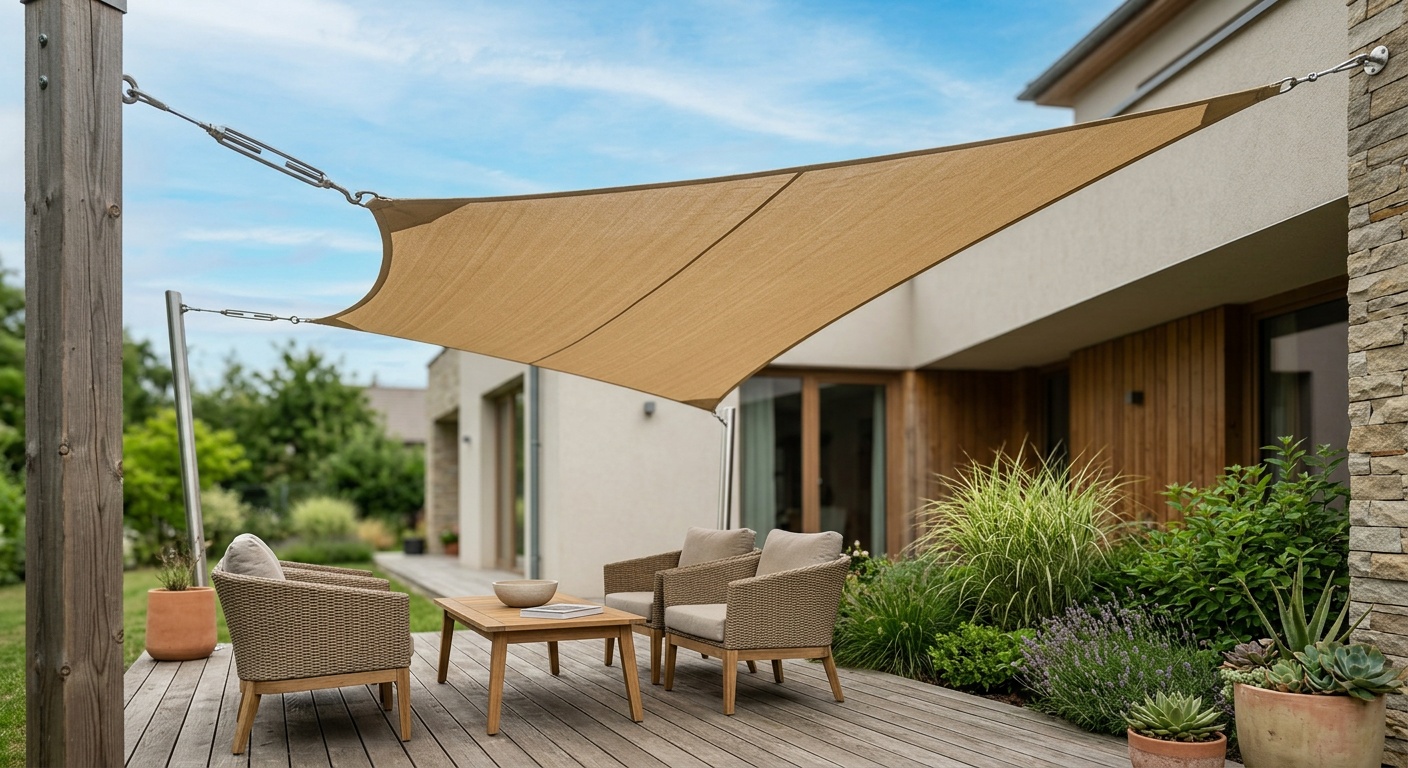
Exterior Shade Sails Design Ideas for Modern Villa Patios
Reading time: 14 minutes
You’ve invested in a stunning villa. The patio is immaculate, the landscaping is lush, and the view is everything you dreamed of — but by 11 a.m., the sun has turned your outdoor sanctuary into a heat trap. Sound familiar? You’re not alone. In 2026, shade sails have emerged as the go-to architectural element for modern villa owners who refuse to sacrifice style for comfort.
Here’s the straight talk: a well-designed shade sail installation isn’t just about blocking UV rays — it’s about extending your living space, enhancing your property’s aesthetic identity, and adding measurable resale value. Done right, shade sails transform a merely beautiful patio into an extraordinary one.
Whether you’re designing from scratch or upgrading an existing outdoor space, this guide delivers the practical roadmap you need — from material selection and mounting configurations to current design trends and installation strategies that actually work.
Table of Contents
- Why Shade Sails Dominate Modern Villa Design in 2026
- Choosing the Right Fabric: Materials That Make or Break the Look
- Design Configurations: Shapes, Angles, and Layering Strategies
- Color Palettes and Aesthetic Trends for 2026 Villas
- Mounting Systems and Structural Considerations
- Real-World Inspiration: Two Villa Shade Sail Transformations
- Common Challenges and How to Overcome Them
- Shade Solution Comparison: Why Sails Win
- Frequently Asked Questions
- Your Outdoor Living Blueprint: Next Steps
Why Shade Sails Dominate Modern Villa Design in 2026
The global outdoor shade solutions market reached a valuation of $4.7 billion in 2025, with shade sails representing the fastest-growing segment at a compound annual growth rate of 8.3%. This isn’t a coincidence. As contemporary architecture increasingly blurs the line between indoor and outdoor living, homeowners demand shade solutions that complement — rather than compromise — the visual language of their homes.
Traditional pergolas and fixed awnings served their purpose, but they impose rigid structural lines and often clash with the fluid, minimalist aesthetics that define modern villas in 2026. Shade sails, by contrast, introduce dynamic geometric tension, shadow play, and a sense of architectural poetry that resonates with today’s design sensibilities.
Key reasons modern villa owners choose shade sails over alternatives:
- Tensile fabric structures complement clean architectural lines without overwhelming them
- Custom sizing enables coverage of awkward or irregular patio shapes
- Modular layering creates multi-level protection and dramatic visual depth
- High-performance fabrics now offer up to 98% UV blockage without sacrificing airflow
- Lower installation costs compared to permanent pergola structures (typically 40–60% less)
- Seasonal removability protects fabric during harsh winters or storms
“In 2026, the shade sail has become what the pergola was in the 2000s — the defining architectural accent of the premium outdoor space. But it’s evolved significantly. We’re now designing entire outdoor rooms around sail configurations rather than treating shade as an afterthought.” — Marcus Helle, Principal Designer, Terrain Studio (Sydney, 2025)
Choosing the Right Fabric: Materials That Make or Break the Look
Your fabric choice is arguably the most consequential decision in a shade sail project. It determines longevity, UV performance, aesthetic quality, maintenance demands, and — critically — how the sail behaves in wind. Let’s break down the primary options available in 2026.
High-Density Polyethylene (HDPE): The Modern Standard
HDPE remains the dominant material for exterior shade sails in 2026, and for good reason. Modern HDPE fabrics like Coolaroo’s 95% UV-block commercial grade and Monotec 370 offer the optimal balance of breathability, UV protection, and weather resistance. The knitted mesh construction allows hot air to escape upward rather than accumulate beneath the sail — a critical feature for patio comfort in warm climates.
HDPE shade sails in 2026 come with UV-stabilized pigments that resist fading for 10–15 years under normal outdoor conditions. They’re also lightweight enough to maintain clean geometric tension without requiring massive anchor structures.
Best for: Hot and sunny climates, pools areas, casual entertaining spaces, and owners who prioritize breathability over waterproofing.
PVC-Coated Polyester: When Waterproofing Matters
If your villa patio is in a region with frequent rainfall — or if you want year-round usability including during light showers — PVC-coated polyester shade sails deliver superior waterproof performance. Fabrics like Ferrari’s Précontraint range offer near-total UV blockage combined with complete waterproofing.
The trade-off is breathability. PVC sails can trap heat underneath, making them less comfortable in high-temperature environments without supplemental air circulation. They’re also heavier, requiring more robust mounting hardware.
Best for: Temperate or rainy climates, covered dining areas where rain protection is essential, and villa owners in coastal regions of northern Europe or the Pacific Northwest.
Recycled and Sustainable Fabric Options
A growing trend in 2026 is the use of shade sail fabrics manufactured from recycled ocean plastics and post-consumer polyester. Brands like Sunbrella’s EcoSolution line and Green-R Fabric have entered the premium market, offering comparable UV and weather performance to virgin HDPE while carrying significant sustainability credentials. For eco-conscious villa owners, this is increasingly a non-negotiable consideration — and it comes with virtually no aesthetic compromise.
Design Configurations: Shapes, Angles, and Layering Strategies
This is where shade sail design becomes genuinely exciting. The configuration of your sails — their shape, height differential, overlap, and orientation — defines both the visual impact and functional performance of the installation. Think of this as the architectural choreography of your outdoor space.
Single Sail Configurations: Clean, Minimal, Deliberate
A single large sail is the purest expression of tensile architecture. For modern villas with a strong architectural identity, a single oversized triangle or rectangle — perfectly tensioned and precisely angled — can be more striking than a complex multi-sail arrangement. The key principle is intentional asymmetry: set attachment points at varying heights (ideally a minimum 18-inch differential) to create a dynamic slope that sheds rain, reduces wind resistance, and adds visual movement.
A 6m × 8m rectangle sail over a rectangular patio, anchored at two wall points and two freestanding powder-coated steel posts, creates a seamless indoor-to-outdoor visual flow that feels both architectural and effortless.
Multi-Sail Layered Arrangements: Creating Outdoor Rooms
The most compelling shade sail designs in 2026 involve multiple overlapping sails at different heights and orientations. This approach serves several purposes simultaneously:
- Gap-free coverage — overlapping sails eliminate hot spots where single sails leave gaps
- Visual depth and shadow play — layered sails create ever-changing shadow patterns as the sun moves
- Zone definition — different sail zones can delineate dining areas, lounging zones, and kitchen spaces without physical barriers
- Wind resilience — smaller overlapping sails handle wind loading better than a single massive sail
A popular 2026 configuration for villa patios involves three triangular sails in a pinwheel arrangement — each anchored at a central high point and three outer posts — creating full coverage with a dynamic rotational visual energy that feels alive without being chaotic.
The Hyper-Angled Sail: A 2026 Signature Look
One of the defining aesthetic trends emerging in premium villa design this year is the dramatic, hyper-angled sail — where one attachment point is set significantly higher than the others (sometimes 2–3 meters of differential), creating an almost wall-like vertical face on one side. This configuration:
- Provides privacy screening from neighboring properties or overlooking windows
- Blocks low-angle afternoon sun that a shallower sail would miss
- Creates a striking architectural focal point visible from both inside and outside the villa
Color Palettes and Aesthetic Trends for 2026 Villas
Color selection for shade sails is as strategic as any interior design decision. The sail will be visible from inside the villa, from the garden, and from street level — and its color interacts dynamically with sunlight, casting tinted ambient light beneath it that affects how furniture, landscaping, and skin tones appear.
2026’s leading color directions for premium villa shade sails:
- Warm Stone and Sand Tones: Colors like dune, sandstone, and warm ivory cast flattering warm light beneath the sail and complement natural stone villa exteriors. These remain perennially popular because they feel both contemporary and timeless.
- Deep Forest Greens: Sage, olive, and deep forest greens have surged in popularity in 2025–2026 as the biophilic design movement continues to influence premium residential projects. These tones blend beautifully with landscaping and cast a pleasantly cool, dappled light reminiscent of tree canopy.
- Charcoal and Graphite: Dark sails create high contrast against white or light-rendered villa walls. They absorb heat themselves but, when positioned with proper airflow clearance, don’t significantly increase temperatures beneath. The visual effect is bold and architecturally intentional.
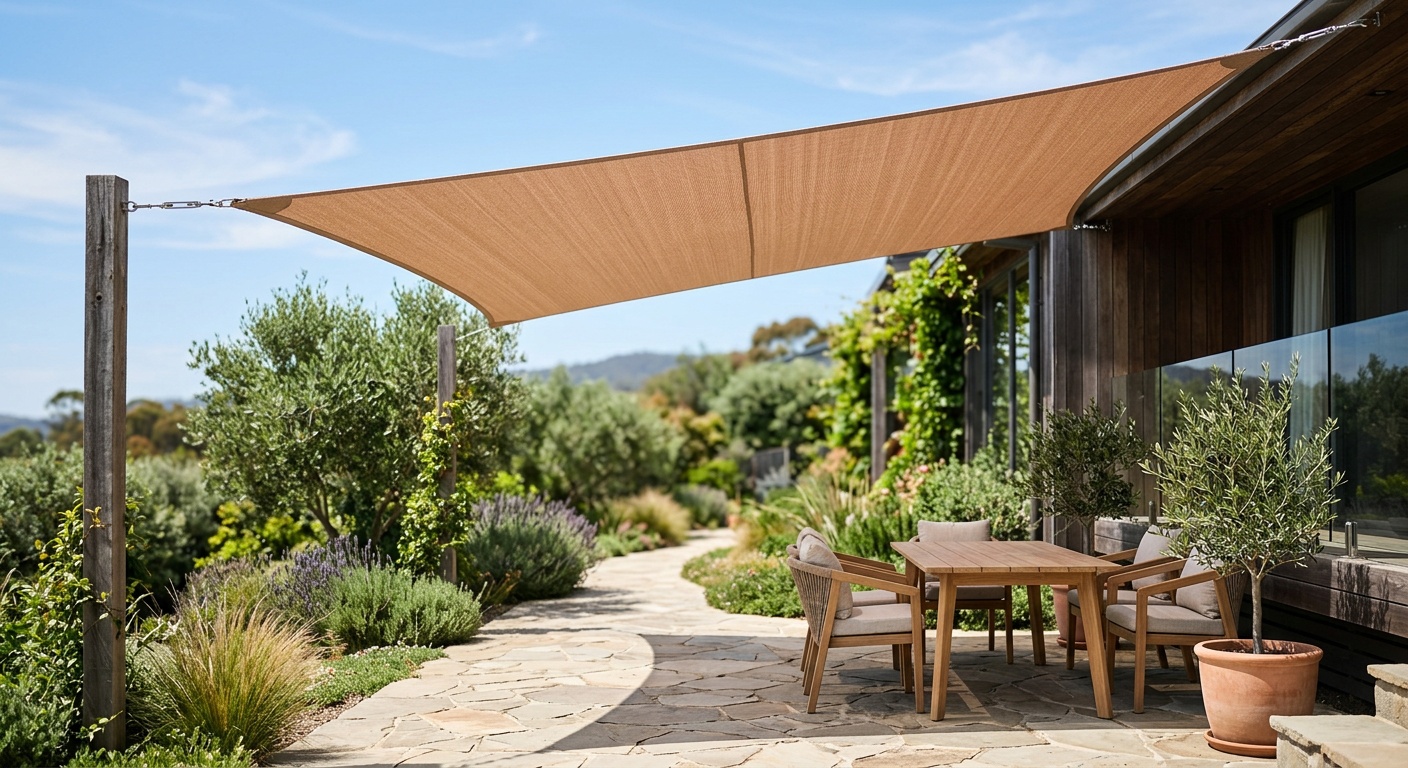
- Burnt Terracotta and Clay: Emerging as a strong 2026 trend, these warm earth tones connect shade sails to the Mediterranean and Californian villa aesthetic traditions while feeling thoroughly modern.
- Crisp White and Off-White: Clean, contemporary, and versatile — white sails maximize light diffusion and are ideal for spaces where brightness is a priority. They require more frequent cleaning in dusty environments.
Pro Tip: Avoid highly saturated primary colors (bright red, royal blue, vivid yellow) for modern villa applications — they date quickly and can clash aggressively with changing plantscapes and furniture trends. Lean toward the muted, sophisticated end of any color family.
Mounting Systems and Structural Considerations
Even the most beautifully designed shade sail will fail — aesthetically and structurally — if the mounting system isn’t engineered correctly. This is the area where professional consultation delivers the most value and where DIY shortcuts cause the most problems.
Primary mounting options for villa patios:
- Freestanding steel posts: Powder-coated or stainless steel posts (typically 75–100mm square section) provide mounting flexibility where wall attachment isn’t possible. Posts must be set in concrete footings calculated for local wind loads — in coastal or elevated locations, engineering sign-off is advisable.
- Wall-mounted stainless steel hardware: Direct wall attachment is the cleanest visual solution and the most structurally efficient. Heavy-duty stainless eye bolts or plate anchors set into concrete or masonry require professional assessment of the wall’s load-bearing capacity.
- Timber integration: Premium villa designs increasingly integrate shade sail hardware into custom timber feature elements — large hardwood posts, pergola-hybrid structures, or architectural timber screens — creating a cohesive design language rather than a purely utilitarian mounting system.
- Tension adjustment hardware: All professional-grade installations incorporate stainless steel turnbuckles or D-shackle tension systems that allow periodic re-tensioning as fabric stretches and hardware settles. This is non-negotiable for maintaining the crisp, taut appearance essential to modern aesthetic standards.
A critical structural principle: shade sails exert surprisingly high forces on attachment points — particularly in wind. A standard 5m × 5m sail can generate forces exceeding 200kg at each corner in a 60km/h wind event. Anchors and posts must be engineered for these loads, not just estimated.
Real-World Inspiration: Two Villa Shade Sail Transformations
Case Study 1: The Malibu Hillside Villa — Triple-Sail Canyon-View Patio
A 2025 renovation project on a clifftop villa north of Malibu presented a classic challenge: a west-facing patio with breathtaking ocean views but punishing afternoon sun from approximately 2 p.m. onward, combined with coastal wind gusts that routinely exceeded 50km/h.
The design team at Pacific Outdoor Studio specified three overlapping HDPE triangular sails in a gradient palette of warm dune, soft sand, and cream — creating a layered cloudlike canopy effect. Sail corners were anchored to two existing concrete columns, two new 100mm powder-coated posts sunk 1.2m into concrete footings, and a single engineered wall plate. The varying heights — ranging from 2.4m to 4.1m — created a dynamic sloped canopy that deflected wind efficiently.
The result: afternoon temperatures beneath the sails dropped by an average of 12°C compared to the unshaded patio, enabling comfortable use from 9 a.m. to sunset. The homeowner reported that the outdoor dining area became the most-used space in the property within weeks of installation.
Case Study 2: The Provençal Stone Villa — Minimal Single-Sail Courtyard Solution
A restored 18th-century stone farmhouse in the Luberon region of Provence required a shade solution for its central courtyard that honored the historical fabric of the building — no drilling into original limestone walls, no visual clutter. The brief was demanding: maximum shade coverage, minimum visual intervention.
The solution: a single oversized 8m × 6m rectangle shade sail in a muted sage green, suspended from four freestanding timber posts deliberately sized and detailed to reference the original agricultural structures of the region. Wall attachment was achieved via two non-invasive masonry strap anchors installed into modern mortar joints. The single-sail simplicity created an almost Japanese aesthetic of restraint — one element doing everything with no unnecessary complexity.
The sage color interacted with the golden limestone walls to create an extraordinarily beautiful filtered light beneath — warm, green-tinted, and deeply flattering. The project won a 2025 French Landscape Architecture award in the residential heritage category.
Common Challenges and How to Overcome Them
Shade sail projects encounter predictable friction points. Here’s how experienced designers and installers address the three most common issues:
Challenge 1: Sagging and Loss of Tension Over Time
Fabric stretches, hardware settles, and thermal expansion cycles gradually reduce the crisp tension that makes shade sails visually compelling. Solution: Invest in quality stainless turnbuckles at every attachment point and schedule a tension check at 6 weeks post-installation, then annually. HDPE fabrics typically require more re-tensioning in the first year than thereafter.
Challenge 2: Wind Damage and Noise
Improperly angled or under-tensioned sails flap in wind, generating noise and accelerating fabric wear. Solution: Ensure a minimum 30-degree slope from the highest to lowest attachment point, maintain proper tension, and install a quick-release pulley at one corner for easy lowering during storm warnings. In high-wind regions, specify HDPE over PVC — the breathable mesh reduces the sail area’s wind resistance significantly.
Challenge 3: Council Approvals and HOA Restrictions
In many regions, shade structures above a certain size or height require planning permission or homeowners association approval. Solution: Research local building codes before designing. In most jurisdictions, sails under 25m² installed without permanent concrete footings qualify as temporary structures exempt from formal permits. A professional installer will navigate this with you as part of the scoping process.
Shade Solution Comparison: Why Sails Win
The table below compares the primary outdoor shade options available for modern villa patios in 2026 across five key metrics:
| Shade Solution | UV Protection | Aesthetic Flexibility | Avg. Install Cost (10m²) | Lifespan | Design Rating |
|---|---|---|---|---|---|
| Shade Sails (HDPE) | 90–98% | Very High | $1,800–$3,500 | 10–15 years | ⭐⭐⭐⭐⭐ |
| Timber Pergola | 30–50% | Moderate | $8,000–$18,000 | 15–25 years | ⭐⭐⭐⭐ |
| Fixed Awning | 85–95% | Low | $2,500–$5,000 | 8–12 years | ⭐⭐⭐ |
| Polycarbonate Roof | 80–99% | Low–Moderate | $5,000–$12,000 | 15–20 years | ⭐⭐⭐ |
| Parasol/Umbrella | 70–85% | High (portable) | $400–$1,500 | 3–7 years | ⭐⭐⭐ |
Patio Usability Improvement by Shade Solution (Survey Data, 2025)
% of owners reporting significantly improved patio usability:
Frequently Asked Questions
How large should a shade sail be for a typical modern villa patio?
For most villa patio applications, shade sails between 20m² and 50m² provide meaningful coverage for dining and lounging zones. A practical starting point is to map your patio furniture arrangement, identify the sun angles during peak usage hours (typically 10 a.m.–4 p.m.), and size the sail to cover those zones with approximately 20–30cm overhang on exposed sides. For patios larger than 40m², a multi-sail arrangement of 2–3 overlapping sails generally delivers better coverage, wind performance, and visual impact than a single oversized sail. Always factor in the setback from pool edges (minimum 1.5m for safety and chemical protection of the fabric).
How much does a professional shade sail installation cost for a villa patio in 2026?
Professional shade sail installations for modern villas in 2026 range from approximately $2,500 for a simple single-sail setup with existing wall anchors to $15,000–$25,000 for complex multi-sail arrangements with custom engineered posts, high-specification stainless hardware, and premium commercial-grade fabrics. The primary cost drivers are the number of freestanding posts required (each adds $600–$1,200 for supply, footing, and installation), fabric quality, and site accessibility. Mid-range villa projects — one to two sails, two to four mounting points, quality HDPE fabric — typically land in the $4,500–$8,500 range. This represents excellent value against comparable permanent structures like pergolas or louvred roof systems.
Can shade sails be left up year-round in all climates?
HDPE shade sails can remain installed year-round in temperate and warm climates, but removal during winter is strongly recommended in regions experiencing heavy snowfall, ice storms, or sustained winds above 60km/h. Snow loading on a shade sail can generate structural forces far exceeding the design parameters of standard mounting hardware. In Mediterranean climates, the sail can typically remain in place 10–11 months of the year with removal only during the most intense storm seasons. PVC waterproof sails are heavier and accumulate snow loads more readily than HDPE mesh sails, making seasonal removal even more important in cold climates. Most professional installations incorporate a quick-release mechanism at one attachment point specifically to facilitate easy seasonal removal without tools.
Your Outdoor Living Blueprint: Next Steps
You now have the strategic foundation to approach your villa patio shade sail project with both confidence and creative ambition. Let’s consolidate this into an actionable roadmap:
Your 5-Step Shade Sail Action Plan:
- Conduct a sun-path audit of your patio. Spend a week noting the sun’s angle and position during your typical outdoor usage hours. Photograph shadows at 10 a.m., 1 p.m., and 4 p.m. This data will drive every design decision that follows.
- Define your design intent first, engineering second. Establish whether you want a minimal single-sail statement, a layered multi-sail outdoor room, or a hyper-angled privacy-and-shade hybrid. Brief a designer or installer with that creative vision — let them solve the engineering within it.
- Specify your fabric based on climate and usage. Hot and sunny climate with a pool nearby? Breathable HDPE. Rainy temperate climate with year-round aspirations? PVC-coated polyester. Eco-conscious villa owner? Request recycled-content fabric options — they are now fully comparable in performance.
- Invest in the hardware, not just the fabric. The sail is what people see; the turnbuckles, posts, and footings are what make it last. Specify marine-grade stainless steel throughout and engineer your post footings for local wind loads, not just rule-of-thumb estimates.
- Plan for maintenance from day one. Schedule your first re-tensioning check at 6 weeks, then annually in spring. Clean the fabric twice per year with mild soapy water and a soft brush. These simple habits will extend the life of your installation by years.
Key takeaways worth carrying forward:
- The right shade sail doesn’t just block sun — it defines space, creates atmosphere, and extends your villa’s architectural identity into the landscape.
- Color, angle, and layering decisions have as much aesthetic impact as material selection — approach them with the same deliberateness you’d bring to interior design choices.
- In an era where outdoor living has become a genuine architectural priority, your patio’s quality directly influences your property’s desirability and value — a well-executed shade sail installation typically returns 120–150% of its cost in perceived property value.
As climate pressures intensify and outdoor living spaces become ever more central to how we inhabit our homes, the shade sail sits at a fascinating intersection of architecture, engineering, and landscape design. By 2027, we expect to see even more sophisticated hybrid systems — smart sails with motorized tensioning, integrated LED lighting, and IoT weather sensors that automatically adjust or retract based on real-time conditions.
The question worth sitting with as you plan your project: What do you want your patio to feel like at 3 p.m. on a brilliant summer afternoon — and what story do you want it to tell about your home? The right shade sail design doesn’t just answer that question. It elevates it.
Article reviewed by Rachel Wu, Budget Control & Project Timeline Management Consultant, on June 8, 2026