 By Diego Reyes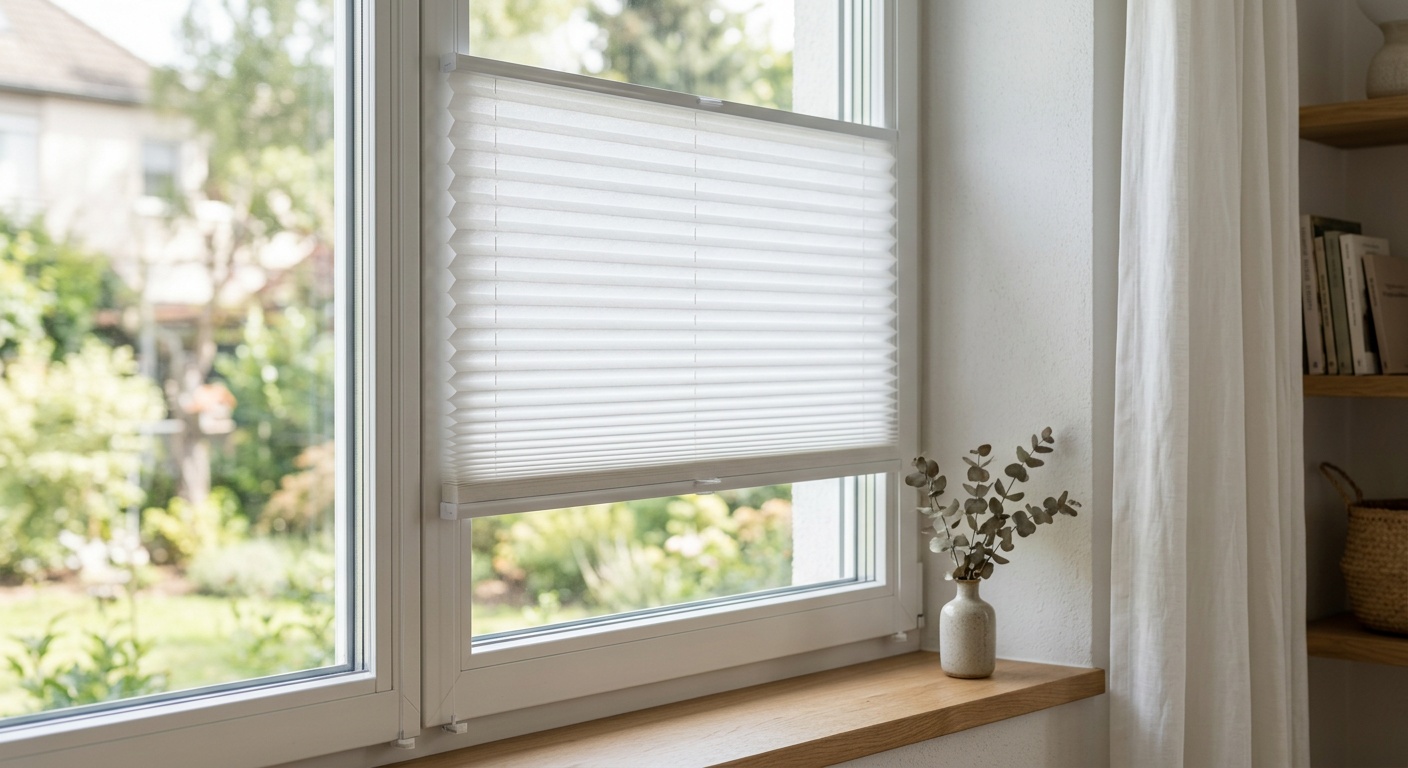
How Cellular Shades Transform Villa Windows and Reduce Heat
Reading time: 12 minutes
If you own a villa — whether it’s a sun-drenched Mediterranean retreat, a sprawling countryside estate, or a modern architectural masterpiece — you already know the struggle. Those gorgeous, oversized windows that flood your rooms with natural light? They’re also quietly turning your living spaces into greenhouses by midday. And with global temperatures breaking new records in 2026, the challenge of keeping villa interiors cool without surrendering comfort or aesthetics has never been more urgent.
Here’s the straight talk: Most villa owners are losing between 25% and 30% of their indoor cooling energy straight through their windows every single day. That’s not just uncomfortable — it’s expensive, and increasingly, it’s unsustainable.
Enter cellular shades — one of the most sophisticated, thermally efficient window treatment solutions available today. Unlike conventional window blinds, cellular shades are specifically engineered with air-trapping honeycomb cells that act as insulating barriers between your interior and the outside world. They’re quietly transforming how villa owners manage heat, light, and energy costs — and the results are genuinely remarkable.
In this guide, we’ll walk you through exactly how cellular shades work, why they’re particularly effective in villa settings, how to choose the right configuration, and what kind of real-world impact you can expect on your comfort and energy bills.
Table of Contents
- What Are Cellular Shades and How Do They Work?
- Why Villas Have Unique Window Challenges
- The Science of Heat Reduction: How Cellular Shades Insulate
- Single, Double, and Triple Cell: Choosing Your Configuration
- Cellular Shades vs. Other Window Treatments
- Real-World Case Studies: Villa Transformations in 2026
- Installation Tips and Common Challenges
- Energy Impact: The Numbers That Matter
- Frequently Asked Questions
- Your Villa Comfort Roadmap: Next Steps
What Are Cellular Shades and How Do They Work?
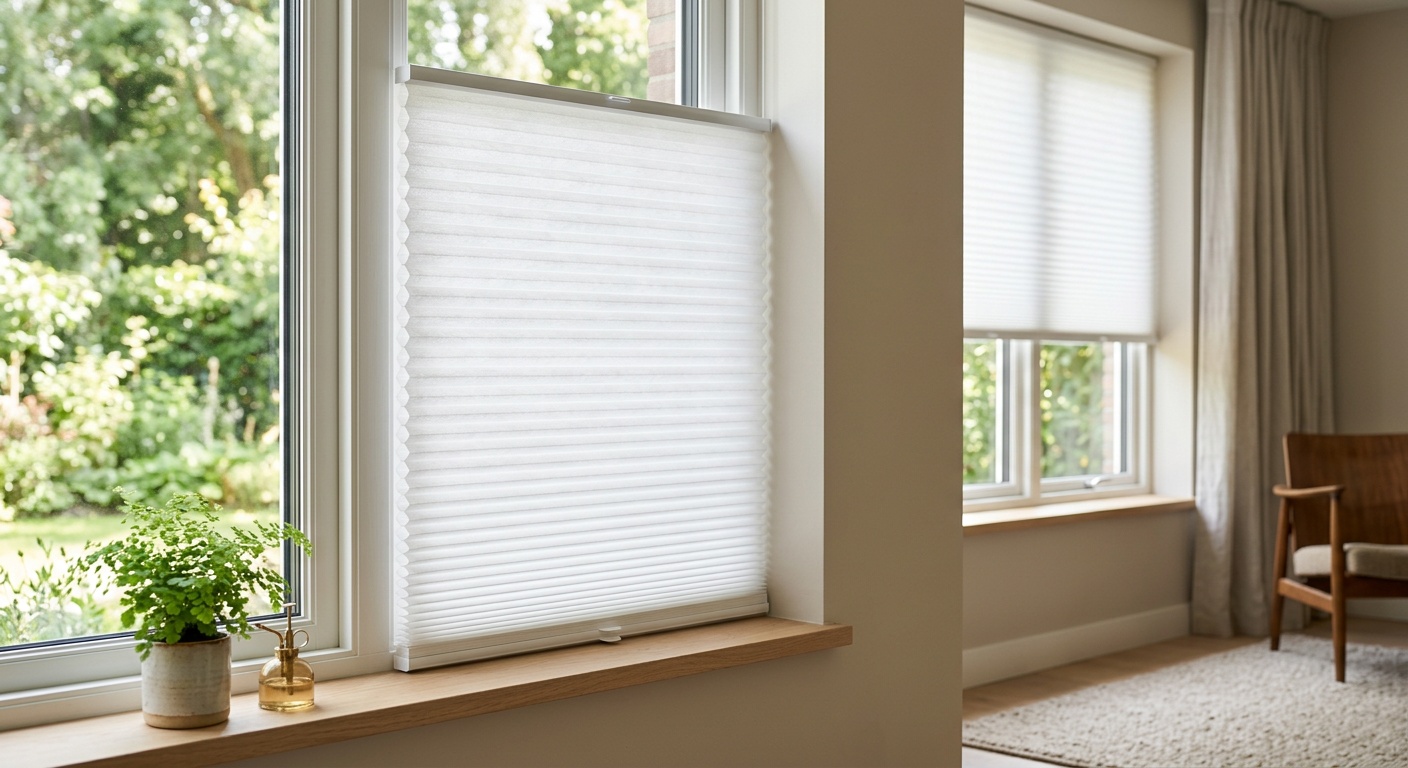
Cellular shades — also called honeycomb shades — are a type of window covering constructed from pleated fabric that forms geometric cells when expanded. These cells are the key innovation. Rather than functioning as a simple opaque barrier, each cell traps a column of air within the fabric structure, creating a continuous insulating layer between your window glass and your room’s interior.
Think of it like wearing a down jacket rather than a cotton shirt in winter. The jacket’s insulation value comes not from the fabric itself, but from the tiny pockets of trapped air within the down fill. Cellular shades operate on exactly the same principle — applied to your windows.
The Core Construction: Breaking Down the Honeycomb
A standard cellular shade is manufactured from non-woven polyester fabric, though premium models increasingly incorporate sustainable materials like recycled PET fibers or plant-based textiles as of 2026. The fabric is heat-bonded rather than sewn, creating clean, continuous cell structures that maintain their shape over years of use.
Key structural components include:
- Cell depth: Typically ranging from 3/8 inch (light filtering) to 3/4 inch (maximum insulation)
- Cell layers: Single, double, or triple — each layer adding measurable R-value (thermal resistance)
- Fabric opacity: Ranging from sheer to room-darkening to complete blackout
- Cord systems: Traditional corded, cordless, motorized, or top-down/bottom-up configurations
The result is a window covering that doesn’t merely block light — it actively manages the thermal exchange happening at your window surface.
Why Villas Have Unique Window Challenges
Standard apartment or house windows present one set of problems. Villa windows are a different beast entirely — and they deserve solutions built to match their scale and complexity.
The Scale Problem: Oversized Windows, Oversized Heat Gain
Villa architecture, particularly in the Mediterranean, Southern Europe, and luxury residential markets across Southeast Asia and the Americas, typically features floor-to-ceiling glazing, expansive picture windows, and multi-panel sliding glass doors. These design choices are intentional — they maximize views, natural light, and the indoor-outdoor living experience that defines luxury villa aesthetics.
But physics doesn’t care about aesthetics. A single 3-meter floor-to-ceiling window can admit the equivalent solar heat of a 1,500-watt space heater during peak afternoon sun in summer. Multiply that across eight to twelve large villa windows, and you’re looking at a thermal load that would defeat most air conditioning systems — and dramatically increase your energy consumption.
According to the International Energy Agency’s 2025 Residential Energy Report, homes with more than 30% glazed surface area spend on average 42% more on cooling costs than comparable homes with standard window ratios. For villas in warm climates, this figure rises to 58% during peak summer months.
Additional villa-specific challenges include:
- Irregular window shapes: Arched, angled, and custom-framed windows that standard off-the-shelf treatments can’t accommodate
- Multiple orientations: Villa windows face multiple compass directions, creating different solar exposure challenges throughout the day
- High ceilings: Manual operation of tall windows is physically difficult without specialized hardware
- Aesthetic sensitivity: Villa interiors represent significant design investments — window treatments must complement, not clash with, carefully curated décor
The Science of Heat Reduction: How Cellular Shades Insulate
To understand why cellular shades perform so well thermally, you need to understand the three mechanisms by which heat travels through windows: conduction, convection, and radiation.
Conduction is the direct transfer of heat through solid materials — glass, frame, and fabric. Convection occurs when air currents carry heat from warm surfaces (your sun-heated window glass) into your cooler room. Radiation is the invisible infrared energy that passes directly through glass and heats surfaces and people inside the room.
Cellular shades address all three mechanisms simultaneously:
- The fabric itself provides a conductive barrier between hot glass and room air
- The trapped air cells eliminate convective currents that would otherwise carry heat inward
- Cellular fabrics with metallic or reflective backings actively reflect radiant infrared energy back toward the window
The combined result is measurable in R-value — the standard metric for thermal resistance. A standard single-pane window has an R-value of approximately R-1. A quality double-cell cellular shade adds R-3.5 to R-4.5 of additional insulation. When combined with a double-pane window, you can achieve effective system R-values of R-7 to R-8 — comparable to a well-insulated wall section.
For villa owners exploring complementary cooling strategies, understanding how to make room colder without ac can help you layer passive cooling techniques alongside your cellular shade installation for maximum impact during extreme heat events.
Single, Double, and Triple Cell: Choosing Your Configuration
Not all cellular shades are equal, and choosing the right cell configuration for your villa depends on your climate, your windows’ orientation, and your primary goals — whether that’s heat reduction, light control, sound dampening, or all three.
Single-cell shades offer a basic level of insulation with a single row of honeycomb cells. They’re lightweight, cost-effective, and suitable for moderate climates or interior rooms where thermal performance is less critical. R-value addition: approximately R-2 to R-3.
Double-cell shades are the villa sweet spot. Two layers of honeycomb cells dramatically increase the trapped air volume, delivering substantially better thermal resistance. They’re the most popular choice for main living areas, sun-facing windows, and year-round use in warm climates. R-value addition: R-3.5 to R-4.5.
Triple-cell shades represent the premium tier. Three honeycomb layers deliver the highest insulation values, making them ideal for extreme climates, rooms with east or west-facing windows that receive intense afternoon sun, or villas where energy efficiency is a top priority. R-value addition: R-5 to R-6.5. They’re heavier and slightly more expensive, but the energy savings typically justify the investment within two to three years.
Cellular Shades vs. Other Window Treatments
How do cellular shades stack up against the alternatives? The comparison is illuminating.
| Window Treatment | Insulation (R-Value Added) | Light Control | Avg. Cost per sq.m (2026) | Lifespan |
|---|---|---|---|---|
| Double-Cell Cellular Shades | R-3.5 – R-4.5 | Excellent (multiple opacity options) | $85–$140 | 10–15 years |
| Standard Roller Shades | R-0.5 – R-1.0 | Good (blackout available) | $30–$65 | 5–8 years |
| Plantation Shutters | R-2.0 – R-3.0 | Good (adjustable slats) | $180–$350 | 20–30 years |
| Thermal Curtains | R-1.5 – R-2.5 | Good (room darkening) | $40–$95 | 5–10 years |
| External Solar Screens | R-1.0 – R-2.0 | Moderate (reduces visibility) | $60–$120 | 8–12 years |
The table reveals a compelling picture: cellular shades deliver the highest insulation value of any interior window treatment, at a price point that undercuts premium alternatives like plantation shutters by 40% to 60%.
Real-World Case Studies: Villa Transformations in 2026
Theory is useful. Real-world outcomes are better. Here are two documented villa projects completed in 2025 and early 2026 that illustrate what cellular shades can actually deliver.
Case Study 1: Tuscan Villa Retrofit — Central Italy
A 420-square-meter restored stone villa near Siena faced a familiar dilemma. The property’s original owner had installed floor-to-ceiling double-pane windows during a 2019 renovation — beautiful, but thermally problematic. By summer 2024, monthly cooling bills were running 35% above regional averages for comparable properties.
In spring 2025, the villa was retrofitted with custom-fabricated double-cell cellular shades across all 14 primary windows, using a warm linen-toned fabric selected to complement the villa’s rustic interior aesthetic. Motorized operation was installed throughout to enable remote and scheduled operation — critical for windows in high-ceiling spaces up to 4.2 meters.
Results measured over the summer of 2025:
- Peak afternoon indoor temperature reduced by an average of 4.3°C with shades deployed
- Air conditioning runtime reduced by 31% compared to summer 2024 baseline
- Total energy cost savings for June–September: €1,840
- Full installation cost: €8,200 — projected payback period: 4.5 years
Case Study 2: Contemporary Coastal Villa — Algarve, Portugal
This 2020-built modernist villa in Portugal’s Algarve region presented a more extreme challenge: an architect-designed facade featuring 68 linear meters of floor-to-ceiling glazing facing southwest — directly into the fiercest afternoon sun in one of Europe’s hottest coastal climates.
The owners in early 2026 invested in triple-cell cellular shades with a reflective metallic backing on the room-facing surface, combined with a motorized automation system integrated with the villa’s existing smart home platform. Shades are programmed to deploy automatically based on solar position data, maintaining optimal thermal conditions without requiring manual intervention.
Initial results from the first quarter of 2026 show a 44% reduction in cooling energy consumption compared to Q1 2025, with interior temperatures during peak solar exposure hours consistently 5.8°C lower than unshaded baselines. The homeowners estimate annual savings of approximately €3,100 against an installation investment of €14,500.
“The difference was immediate and dramatic. We’d essentially been living in a solar collector. The triple-cell shades turned our most challenging architectural feature into one that finally works with us rather than against us.” — Villa owner, Algarve, February 2026
Installation Tips and Common Challenges
Even the best cellular shades underperform if they’re poorly installed. Villa installations present specific challenges that require careful planning to get right.
Challenge 1: Ensuring a tight window fit. Cellular shades deliver their maximum insulation value when they’re mounted as close to the window frame as possible, minimizing air gaps at the sides, top, and bottom. For inside-mount installations (where the shade fits within the window recess), precise measurement is critical — errors of even 5–6mm can create air bypass channels that significantly reduce thermal performance.
Pro Tip: Always measure window width at three points (top, middle, and bottom) and use the narrowest measurement to ensure proper fit. For windows wider than 2 meters, consider split shade configurations that meet in the center rather than single oversized panels, which can sag over time.
Challenge 2: Managing extra-tall windows. Villa windows taller than 2.5 meters create practical operation challenges. Manual pull cords become unwieldy and potentially dangerous at greater heights. Motorized systems — either battery-powered or hardwired — are strongly recommended for any window exceeding 2 meters in height. By 2026, solar-powered motorized systems have become increasingly cost-effective, eliminating the need for electrical wiring runs in retrofit applications.
Challenge 3: Customizing for non-standard shapes. Arched windows, angled skylights, and bay configurations common in villa architecture require specialty fabrication. Most premium cellular shade manufacturers now offer custom-cut shapes with lead times of two to four weeks. The additional cost is typically 15–25% above standard rectangular pricing — well worth it to maintain both performance and aesthetics.
Challenge 4: Balancing privacy and light. Villas often have competing needs — maximum heat rejection in south-facing rooms, natural light preservation in north-facing spaces, and privacy screening in ground-floor rooms. The solution is a room-by-room specification approach rather than a one-size-fits-all installation. Consider:
- Room-darkening or blackout fabrics for bedrooms and south/west-facing living areas
- Light-filtering fabrics for north-facing rooms and spaces where diffused natural light is desired
- Top-down/bottom-up configurations for ground-floor rooms where privacy at eye level matters but overhead light is welcome
Energy Impact: The Numbers That Matter
Let’s visualize the energy reduction impact of different cellular shade configurations compared to an unshaded baseline. Data sourced from the European Fenestration Association’s 2025 Residential Thermal Performance Study, adjusted for villa-scale window areas.
Cooling Energy Reduction by Window Treatment Type (%)
The visualization makes the progression clear: each step up in cellular shade complexity delivers meaningful incremental gains. The jump from no treatment to double-cell shades — the most popular villa choice — represents a 38% reduction in cooling energy demand. For a villa running €4,000 in annual cooling costs, that’s approximately €1,520 in annual savings.
It’s also worth noting the sustainability angle. In 2026, as European and international energy regulations continue tightening under revised building efficiency standards, properties with documented thermal performance improvements command measurable premiums in both rental and sale markets. A well-documented cellular shade installation contributes to your villa’s energy performance certificate — a factor increasingly weighted by high-end property buyers.
Frequently Asked Questions
Do cellular shades work effectively in very hot climates, or are they primarily for cold-weather insulation?
Cellular shades perform exceptionally in hot climates and are arguably more impactful as summer heat barriers than winter insulators. Their honeycomb air cells prevent solar heat from transferring inward through windows during hot months just as effectively as they prevent indoor warmth from escaping during winter. In climates like the Mediterranean, Middle East, or Southern USA — all high-priority markets in 2026 — cellular shades with light-reflective backing fabrics can reduce solar heat gain through windows by 40–50% compared to unshaded glazing, dramatically reducing the load on air conditioning systems.
How do I clean and maintain cellular shades in a dusty or coastal villa environment?
Maintenance is simpler than most villa owners expect. For routine dust removal, a handheld vacuum with a brush attachment used monthly is sufficient for most environments. Coastal villas exposed to sea spray benefit from quarterly gentle cleaning with a slightly damp cloth applied to fabric surfaces. For deeper cleaning, most modern cellular shade fabrics can be spot-cleaned with mild soap and water — avoid soaking, which can distort the cell structure. Many 2026-era cellular shade fabrics incorporate antimicrobial and moisture-resistant treatments that significantly reduce maintenance requirements in humid or coastal settings. Professional cleaning services are available for annual deep-clean cycles in luxury villa applications.
What’s the best way to integrate cellular shades with a smart home or home automation system?
Smart integration has become highly accessible in 2026, with motorized cellular shades now available in formats compatible with all major home automation platforms including Google Home, Apple HomeKit, Amazon Alexa, Control4, and Crestron. Battery-powered motors have become the default choice for retrofit villa installations, eliminating the need for electrical work while offering three to five years of operation per charge. For optimal thermal management, program shades to close automatically based on solar angle data rather than simple time schedules — this ensures shades deploy precisely when solar heat gain would otherwise peak, regardless of seasonal variation. Integration with outdoor temperature sensors allows the system to intelligently balance ventilation cooling against solar heat blocking throughout the day.
Your Villa Comfort Roadmap: Next Steps
You now have a clear picture of what cellular shades can do, how they work, and what realistic outcomes look like in real villa environments. Here’s how to move from information to action with confidence.
Your implementation roadmap:
- Audit your windows this week. Walk through your villa with a notepad and map every window by orientation (north, south, east, west) and current treatment. Note which rooms run hottest in summer and when — this tells you where your thermal challenges are concentrated and where investment will deliver the fastest returns.
- Prioritize south and west-facing windows first. These receive the most intense solar exposure in the northern hemisphere. A targeted installation covering your highest-heat-gain windows delivers 60–70% of the total thermal benefit at roughly 40–50% of a whole-villa installation cost — a smart starting point for budget-conscious projects.
- Get three professional quotes with fabric samples. Insist on double-cell as your baseline specification and triple-cell options for your worst-performing rooms. Ask each supplier to provide R-value documentation for their specific products, not just general cellular shade claims.
- Consider motorization from the start. Retrofitting motorization after manual installation is costly and disruptive. Build it into your initial specification — especially for windows taller than 2 meters or in hard-to-reach locations.
- Document your before-and-after. Track your energy bills, note peak room temperatures, and capture the qualitative comfort improvement. Not only does this validate your investment, it builds documented evidence of improved energy performance that adds measurable value to your villa’s market profile.
As climate patterns continue shifting and energy costs remain elevated through 2026 and beyond, the villas that invest intelligently in passive thermal management will hold their value, their comfort, and their sustainability credentials significantly better than those that don’t. Cellular shades represent one of the most efficient intersections of aesthetics, performance, and return on investment available in residential window solutions today.
The question worth sitting with: How much of your villa’s potential comfort and energy efficiency are you leaving on the table every single day — and what would it feel like to finally fix that?
Article reviewed by Rachel Wu, Budget Control & Project Timeline Management Consultant, on June 8, 2026