 By Diego Reyes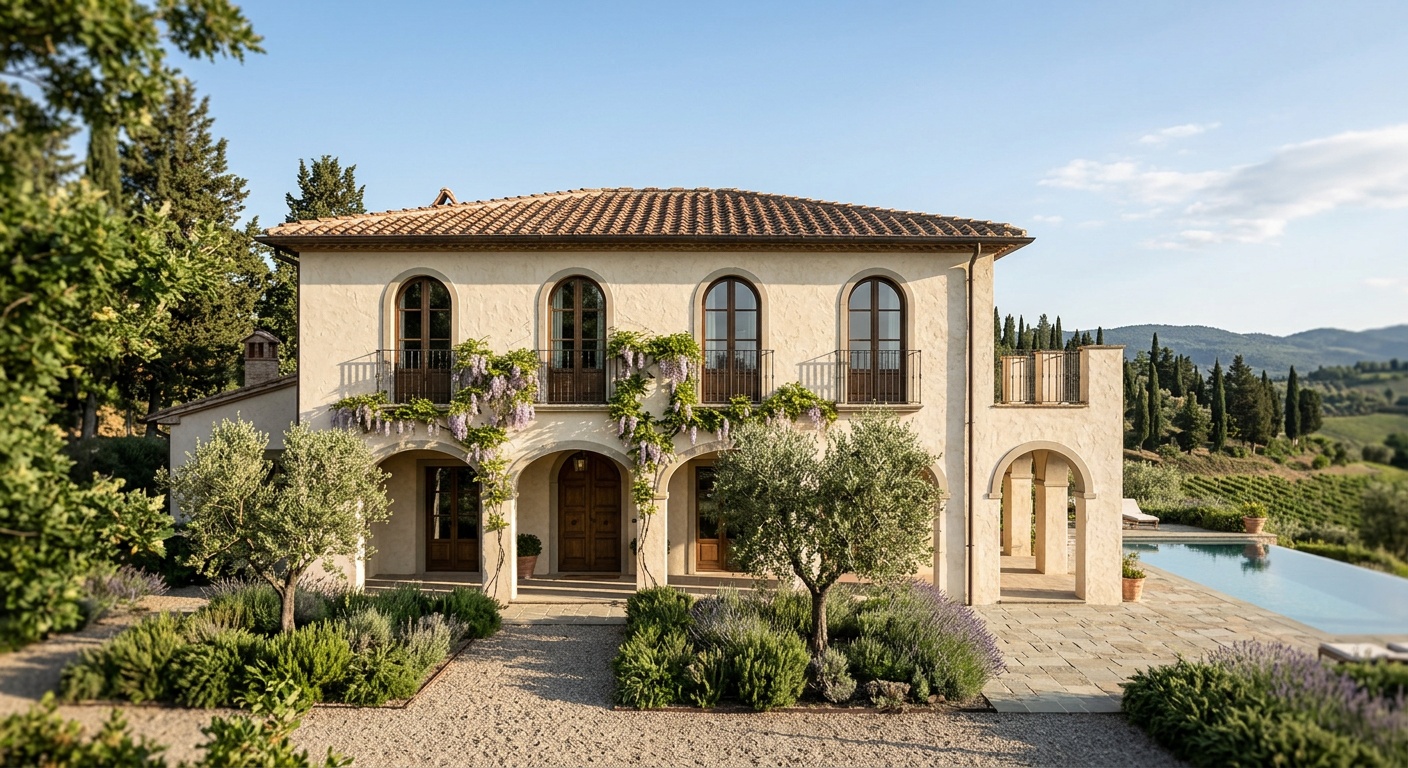
Before and After Villa Exterior Makeovers That Boost Curb Appeal
Reading time: 14 minutes
Picture this: you pull up to a villa that looks tired, dated, and forgotten. Peeling paint, an overgrown front garden, and a driveway that hasn’t seen fresh gravel since 2015. Now imagine the same property after a thoughtful exterior makeover — a crisp, modern façade, lush landscaping, and an entrance that practically whispers luxury. That transformation isn’t magic. It’s strategy.
Villa exterior makeovers have surged in popularity in 2026, driven by rising property values, a competitive real estate market, and homeowners who’ve discovered that curb appeal isn’t just about aesthetics — it’s about serious financial returns. According to a 2025 National Association of Realtors report, homes with high curb appeal sell for an average of 7–14% more than comparable properties with neglected exteriors. For a villa valued at €800,000, that’s a potential uplift of €56,000 to €112,000 from the right exterior investments.
This guide walks you through the most impactful before-and-after transformations, the projects worth prioritizing, and the practical roadmap for executing a villa exterior makeover that turns heads — and adds real value.
Table of Contents
- Why Curb Appeal Matters More Than Ever in 2026
- The Key Elements of a Villa Exterior Makeover
- Before & After: Three Real-World Transformation Stories
- ROI Breakdown: Which Projects Pay Off Most
- Curb Appeal Impact Visualization
- Common Challenges — and How to Overcome Them
- Frequently Asked Questions
- Your Villa Transformation Roadmap: Where to Start Today
Why Curb Appeal Matters More Than Ever in 2026
The exterior of your villa is doing a job 24 hours a day, 7 days a week. It communicates status, care, and character before a single door is opened. In 2026’s property landscape, where buyers and renters increasingly make decisions based on social media listings and satellite imagery before ever booking a viewing, that first impression has become almost irreversibly influential.
Here’s the straight talk: a stunning interior means nothing if someone scrolls past your listing in under two seconds. Real estate platforms report that listings with professionally photographed, high-curb-appeal exteriors receive 61% more online views and 49% more in-person viewing requests. The exterior is your billboard, your handshake, and your brand all rolled into one.
Beyond resale value, villa owners in 2026 are also motivated by the boom in short-term luxury rentals. Platforms specializing in high-end villa stays report that properties with well-executed exterior presentations command 22–30% higher nightly rates compared to interiors-only renovated villas in similar locations. Guests want the full visual experience from the moment they arrive.
The 2026 Curb Appeal Mindset Shift
What’s changed most recently is the holistic approach to exterior design. Villa owners in the past might repaint the façade and call it done. Today’s makeovers consider the entire visual journey — from the street view to the entrance gate, the driveway experience, the lighting at dusk, and even the landscaping as it changes through the seasons.
Architects and landscape designers in 2026 are increasingly using augmented reality (AR) previewing tools that allow homeowners to see photorealistic simulations of their villa’s exterior before a single contractor is hired. This has dramatically reduced costly mistakes and helped owners commit to bolder design choices with confidence.
The Key Elements of a Villa Exterior Makeover
Not all exterior upgrades are created equal. The most successful villa transformations address multiple layers simultaneously, creating a cohesive design language that feels intentional rather than patchwork. Here are the core elements to consider:
1. Façade & Surface Treatments
The façade is your villa’s face. Whether you’re working with render, stone cladding, brick, timber, or a combination, the condition and color of this surface dominates the first impression. Key interventions include:
- Repainting or rerendering: A fresh coat of high-quality exterior paint or a new render layer can completely transform a dated villa. In 2026, the trending palette leans toward warm whites, soft clay tones, and deep charcoal accents — moving away from the cold grey minimalism that dominated the 2018–2023 period.
- Stone or tile cladding additions: Adding natural stone features around the entrance or on accent walls creates texture and visual depth without a full façade replacement.
- Cleaning and restoration: Sometimes the original material is beautiful — just obscured. Professional pressure washing, lime washing, or sandblasting can reveal stunning original stonework that’s been hiding under decades of grime.
2. Roofline and Architectural Details
The roofline defines your villa’s silhouette against the sky. Replacing aged roof tiles, adding architectural guttering, updating fascia boards, or adding decorative cornices can dramatically change the perceived quality of a property. This is often an underestimated transformation zone.
3. Windows, Doors, and Entrance Features
According to a 2025 Houzz European Renovation Survey, upgrading the front door and entrance area delivers one of the highest satisfaction scores of any exterior project — 89% of homeowners reported it exceeded their expectations for visual impact. A grand entrance door in a bold color, flanked by statement lighting and framed by clean architectural detailing, signals quality and confidence.
- Replacing aluminum windows with timber or composite frames in contemporary profiles
- Installing oversized pivot or double-door entrance sets
- Adding pergolas, porticos, or covered entrance canopies
- Upgrading ironwork on gates and railings
4. Driveways and Hard Landscaping
The approach to your villa sets the tone before guests even reach the front door. Cracked concrete or weedy asphalt communicates neglect instantly. High-impact upgrades include:
- Natural stone pavers or premium block paving in geometric patterns
- Resin-bonded aggregate driveways (extremely popular in 2026 for their clean, low-maintenance appearance)
- Statement entrance pillars or gatehouses
- Integrated lighting along the driveway edge
5. Landscaping and Softscaping
Plants, trees, hedges, and lawn condition soften the architecture and add living color to your exterior. The 2026 trend leans strongly toward Mediterranean and drought-tolerant planting schemes — both for their aesthetic appeal and their low-maintenance, climate-resilient qualities. Lavender borders, ornamental grasses, olive trees, and architectural agaves are dominating villa gardens from Portugal to the south of France to coastal Australia.
6. Exterior Lighting
Lighting is the makeover element most homeowners overlook — and one of the most powerful. Strategic exterior lighting transforms a villa at night into something genuinely dramatic. Uplighting feature trees, recessing path lighting into paving, installing wall-wash lighting along the façade, and choosing warm-toned LED fittings for the entrance creates an entirely different property after dark.
Before & After: Three Real-World Transformation Stories
Case Study 1: The Provençal Stone Villa — Southern France
Before: A 1970s stone villa near Aix-en-Provence with an overgrown garden, a sagging timber pergola at the entrance, faded dark-blue shutters, and a gravel driveway that had become more weed than stone. Despite a beautifully renovated interior, the property had languished on the rental market for two seasons at below-market rates.
The Intervention: The owners worked with a local landscape architect and a stone restoration specialist. Original limestone façade was cleaned and repointed. The pergola was replaced with a sleek powder-coated steel structure draped with wisteria. Shutters were repainted in a sophisticated warm sage green. The driveway was relaid with compacted limestone chippings and edged with lavender rows. Uplighting was installed around three mature olive trees framing the entrance.
After: The property’s nightly rental rate increased from €1,200 to €1,650 per night — a 37.5% increase — within the first booking season following the makeover. Total investment: approximately €34,000. Estimated additional annual rental revenue from the rate increase: €58,000 (based on 85 nights occupancy). ROI achieved within eight months.
Case Study 2: The Mediterranean White Villa — Mallorca, Spain
Before: A sprawling Mallorcan villa built in the 1990s with a façade yellowed by sun exposure, dated terracotta roof tiles in poor condition, wrought iron gates with flaking black paint, and a pool terrace visible from the street with mismatched outdoor furniture cluttering the view.
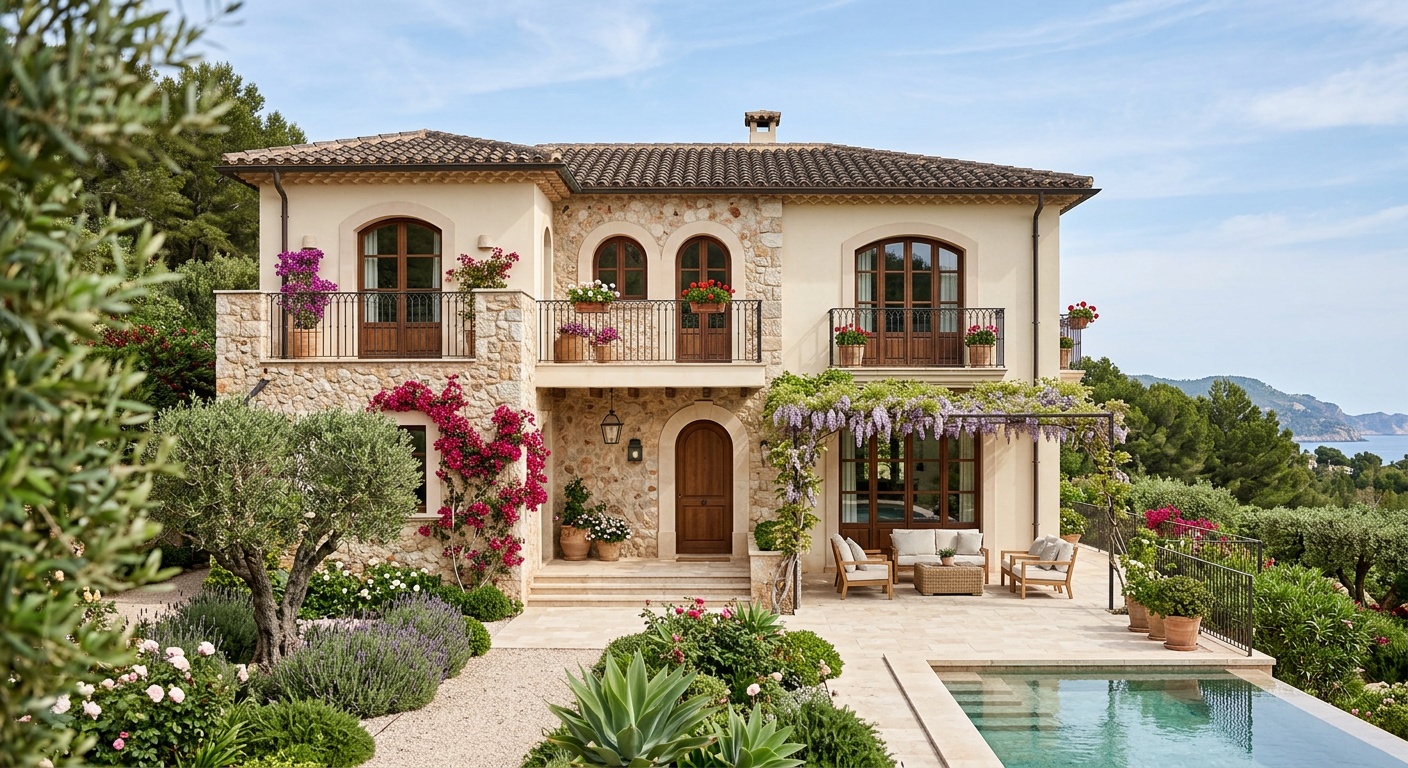
The Intervention: Exterior walls were rerendered and painted in a contemporary warm white. Roof tiles were replaced with aged terracotta new-stock tiles in a subtler, more uniform tone. Gates were sandblasted and powder-coated in a deep forest green. The pool terrace boundary wall was raised slightly and planted with olive trees to create privacy while adding visual interest from the street. Exterior lighting was installed throughout.
After: The property was listed for sale in early 2026 at €3.2 million. It sold within 6 weeks at asking price — exceptional in the current market. The estate agent confirmed that comparable properties in the same neighborhood without exterior renovation had taken an average of 7–10 months to sell and achieved 8–12% below asking price.
Case Study 3: The Modernist Villa — Cape Town, South Africa
Before: A modernist concrete villa with significant weathering on the exposed concrete surfaces, rusting steel balustrades, a bare front garden with compacted earth, and a flat entrance with no sense of arrival or arrival sequence.
The Intervention: Concrete surfaces were treated with a penetrating sealer and given a subtle lime-wash effect finish. Steel balustrades were replaced with powder-coated aluminium in warm bronze. A structured entrance garden was designed with large-format decomposed granite panels, architectural boulders, and native fynbos planting. A cantilevered steel entrance canopy was added. Pathway lighting was integrated into the granite border.
After: The villa featured in two leading architectural lifestyle publications in 2025 and was selected as a case study in the 2026 South African Institute of Architects annual review. Property valuation increased by 19% — approximately R2.4 million — directly attributable to the exterior renovation according to the owner’s appointed valuer.
ROI Breakdown: Which Projects Pay Off Most
Not every exterior upgrade delivers equal returns. The following table compares key makeover projects by average cost, estimated value uplift, and typical payback period — based on aggregated European and Southern Hemisphere villa market data from 2025–2026.
| Project Type | Avg. Cost (€) | Estimated Value Uplift | Payback Period | Difficulty Level |
|---|---|---|---|---|
| Façade Repaint / Rerender | €8,000–€25,000 | 6–11% | 1–3 years | Medium |
| Front Door & Entrance Upgrade | €3,000–€12,000 | 4–8% | Under 1 year | Low–Medium |
| Driveway & Hard Landscaping | €12,000–€40,000 | 5–9% | 2–4 years | Medium–High |
| Garden & Soft Landscaping | €6,000–€20,000 | 5–12% | 1–3 years | Low–Medium |
| Exterior Lighting Installation | €4,000–€15,000 | 3–7% | Under 2 years | Low |
*Data compiled from European Renovation Benchmarking Index 2025, Houzz Renovation Trends Report 2026, and Knight Frank Luxury Property Report Q1 2026.
Curb Appeal Impact: Buyer Decision Influence by Exterior Element
The chart below illustrates how different exterior elements influence buyer or renter decisions, based on a 2025 survey of 1,200 luxury property buyers across Europe and the Mediterranean.
Source: European Luxury Property Buyer Survey, Houzz Research Division, 2025. n=1,200 respondents. Percentages indicate share of buyers rating element as “highly influential” in purchase or rental decision.
Common Challenges — and How to Overcome Them
Challenge 1: Managing Budget Without Losing Vision
One of the most frequent points of frustration in villa exterior makeovers is the gap between aspirational vision and available budget. It’s easy to fall in love with a Pinterest-perfect rendering and then discover the quote is three times what you’d planned. Here’s how to navigate this strategically:
- Prioritize by impact-to-cost ratio. Façade painting and entrance upgrades deliver the highest visual impact per euro spent. Start there before committing to more expensive driveway or structural work.
- Phase the project. Plan the full vision, but execute in phases over 2–3 years. This spreads cost without sacrificing design coherence — as long as you have a master plan from the beginning.
- Get three quotes minimum. In 2026’s construction market, contractor pricing varies by as much as 40–60% for the same scope of work. Always benchmark before committing.
Pro Tip: Many villa owners find that spending €1,500–€2,500 on a professional exterior design consultation upfront saves them multiples of that figure by avoiding costly mistakes and identifying the highest-leverage interventions for their specific property.
Challenge 2: Navigating Planning Permissions and Heritage Restrictions
In many European countries and heritage-sensitive regions, villa exterior changes — particularly in areas with architectural conservation orders — require planning approvals that can take weeks or months. Changes to roof profiles, window sizes, or material types may be restricted.
The practical workaround: engage a local architect or planning consultant before any design work begins. Understanding the permitting landscape for your specific property and region from day one prevents design investment in solutions that will never be approved. In 2025, it was reported that approximately 23% of rejected exterior renovation permits in Mediterranean tourist zones were for projects that had bypassed early feasibility checks — an entirely avoidable situation.
Challenge 3: Maintaining Long-Term Curb Appeal
A stunning exterior makeover can deteriorate rapidly without a maintenance plan. Exterior paint in sunny climates may need refreshing every 5–7 years. Resin driveways require occasional cleaning. Planting schemes need seasonal management. The mistake many owners make is treating the makeover as a one-time event rather than an ongoing commitment.
Build a maintenance schedule and annual budget line into your villa ownership costs from the moment the makeover is complete. A well-maintained exterior that was transformed five years ago will consistently outperform a freshly renovated exterior that has been subsequently neglected.
Frequently Asked Questions
How much does a full villa exterior makeover typically cost in 2026?
The range is wide, depending on villa size, location, scope, and material choices. A focused cosmetic makeover — fresh render or paint, entrance upgrade, basic landscaping refresh, and exterior lighting — typically runs between €25,000 and €60,000 for a mid-size villa. A comprehensive transformation including driveway replacement, full landscaping redesign, and structural entrance features can reach €100,000–€250,000 or more for larger properties. The key is to define your goals clearly before approaching contractors: are you preparing for sale, optimizing rental income, or investing in long-term lifestyle enjoyment? Each goal calls for a different prioritization of budget.
Which exterior upgrades add the most value when selling a luxury villa?
Based on 2025–2026 real estate market data, the highest-value exterior upgrades for resale are: (1) façade repainting or rerendering in a contemporary, market-relevant color palette; (2) professional landscaping that creates a coherent, low-maintenance garden scheme; and (3) entrance and gate upgrades that signal quality and security. Exterior lighting consistently punches above its cost in creating evening photography appeal — critical for online listings. Avoid hyper-personalizing the exterior in ways that appeal to a very narrow buyer demographic; the goal is broad-appeal, quality signaling rather than individual expression.
How long does a typical villa exterior makeover take from planning to completion?
For a focused makeover covering façade, entrance, and basic landscaping, expect 8–16 weeks from design sign-off to completion — assuming no significant planning permission requirements. More comprehensive projects involving driveway replacement, major structural additions, or complex planting schemes can run 4–9 months. The planning and design phase itself typically takes 4–8 weeks before any physical work begins. In 2026, contractor availability in popular renovation markets (Mallorca, Côte d’Azur, Algarve) remains tight, so building a lead time of 3–6 months from initial brief to work commencement is advisable.
Your Villa Transformation Roadmap: Where to Start Today
Transforming a villa’s exterior isn’t a single decision — it’s a sequence of smart choices that compound into something remarkable. Here’s your action-oriented roadmap for moving from where you are now to the property you’ve envisioned:
- Conduct an honest exterior audit. Walk around your villa with fresh eyes — or better yet, ask someone who hasn’t seen it recently. Photograph every elevation at different times of day. Identify the three elements that create the most negative first impression. These are your starting priorities.
- Engage a professional for a design consultation. Even a single session with an exterior architect or landscape designer will crystallize possibilities you hadn’t considered and prevent costly mistakes. AR visualization tools make this investment especially valuable in 2026.
- Define your primary objective. Sale preparation, rental income optimization, and personal lifestyle enjoyment call for different investment priorities. Know your goal before spending a euro.
- Build a phased master plan with a realistic budget. Full vision, phased execution. Phase one should always address the highest-impact, most visible elements first.
- Create a maintenance schedule from day one. Your makeover investment deserves protection. Budget annually for maintenance and treat curb appeal as an ongoing asset, not a one-time project.
In 2026, the gap between a well-presented villa exterior and a neglected one has never been more financially significant — or more visually obvious in a world where every potential buyer, guest, or visitor pre-screens properties online before setting foot on your driveway.
As design strategist and luxury property consultant Isabelle Marchetti noted in her widely shared 2025 keynote address: “The exterior of a luxury villa is no longer decoration — it’s the property’s first and most persuasive sales argument, performing silently every single day.”
Your villa has a story to tell from the street. The question worth sitting with is this: Is the story it’s currently telling the one you want the world to hear? If the answer is anything less than a confident yes — your transformation roadmap starts today.
Article reviewed by Rachel Wu, Budget Control & Project Timeline Management Consultant, on June 8, 2026